

the Catholic Tradition
These three concepts approach the same territory from three different directions.
The territory is death, and what the Catholic tradition has been saying about it for two thousand years. Not doctrine imposed from outside human experience, but a living response to it, developed over centuries because human beings keep having these experiences and needing a language for them.
Three entry points. Three audiences. One argument about what it means to die, what it means to grieve, and what the tradition holds about both.
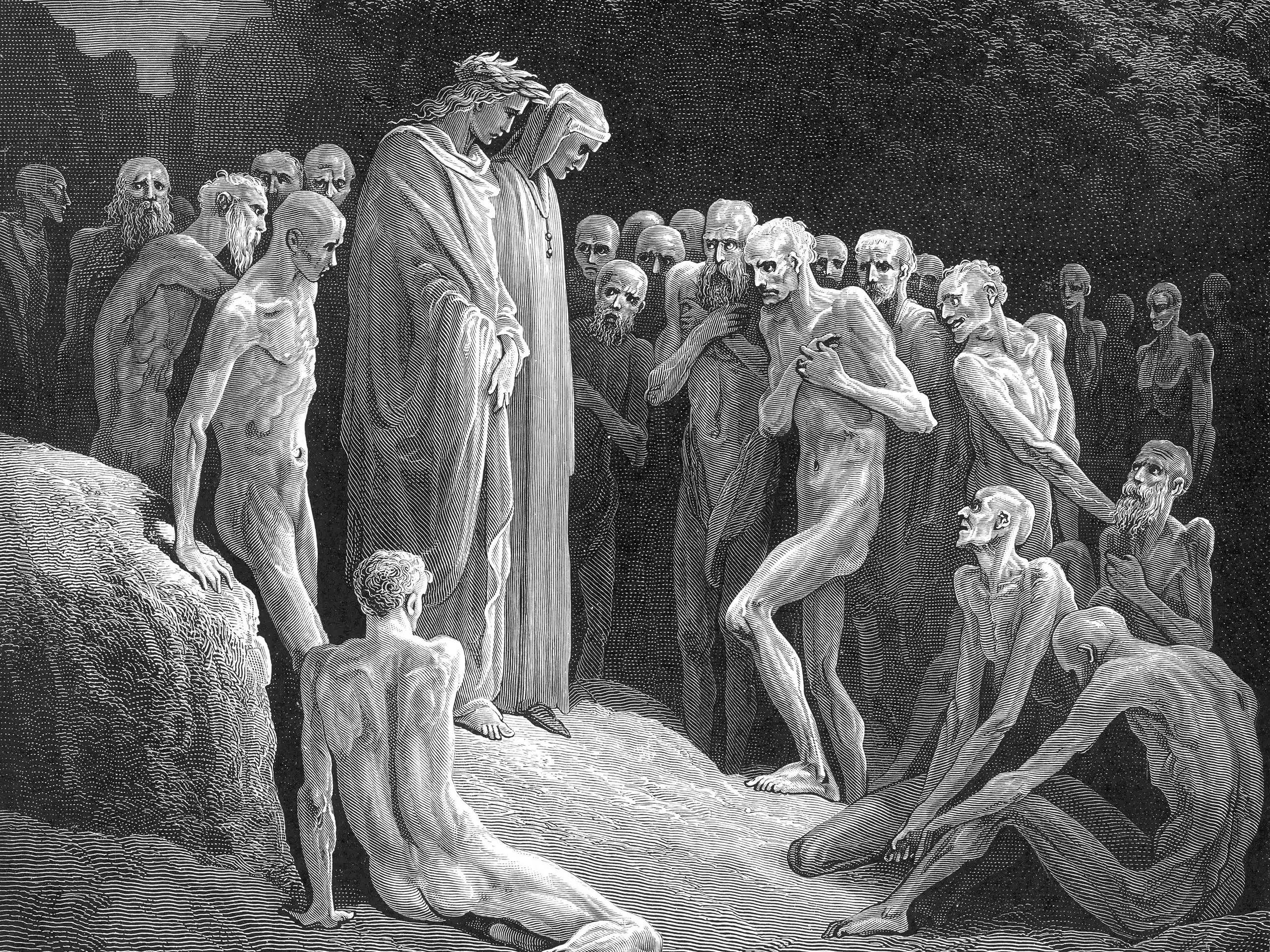
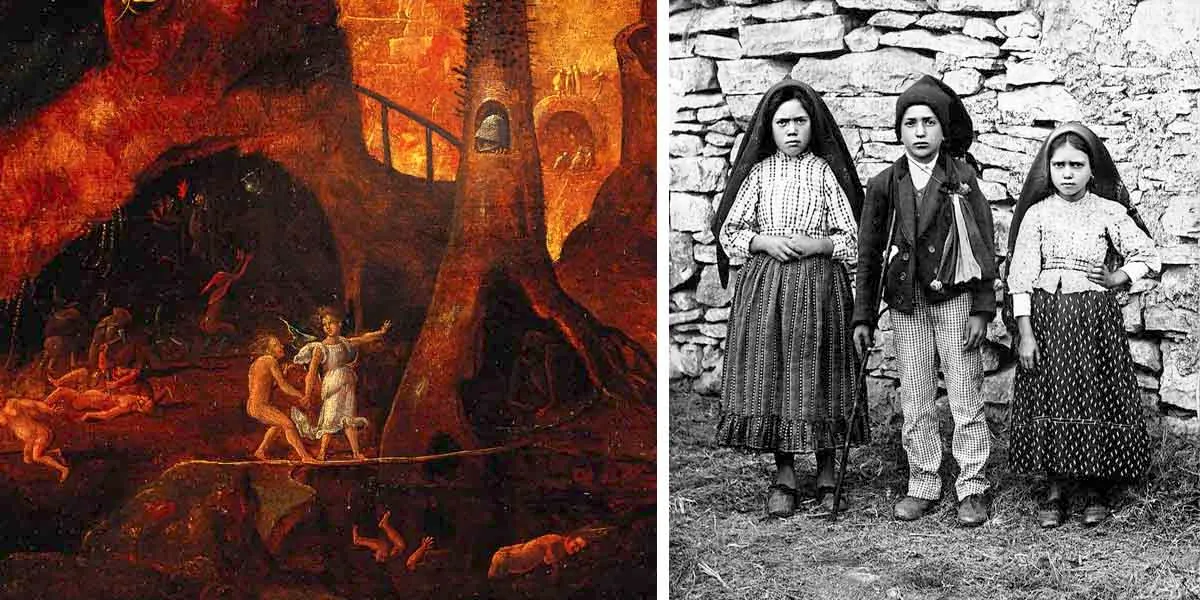
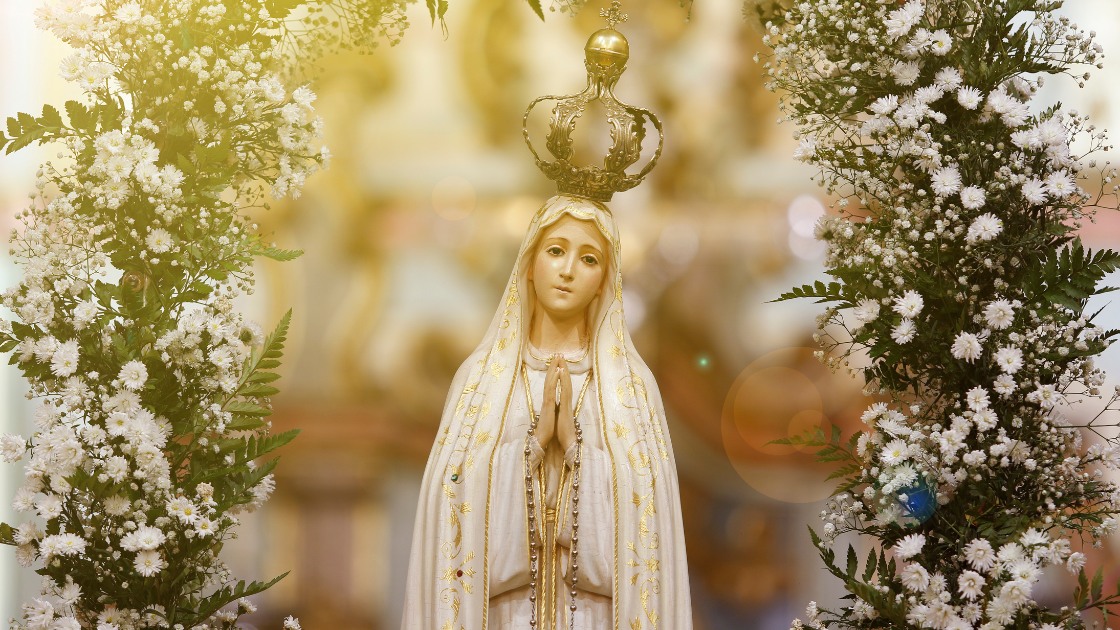
What are we doing when we pray for the dead? The widow who lights a candle every November knows she is doing something, but she cannot always say what. The man who prays for his estranged father, who died before they reconciled, cannot say why he keeps going back to the same pew. This concept asks those people to say it plainly, and then shows them that the Church has been answering that question for two thousand years.
Not grief resolved. Grief accompanied. The moment a person who has been carrying loss or guilt in silence discovers that there is a name for what they have been feeling, that millions of people across centuries have knelt in the same darkness and been held by the same tradition, that they are not alone in it and never have been. The doctrine of Purgatory is the door this concept walks through.
At Fatima in 1917, Our Lady showed three shepherd children a vision of souls in Purgatory. She did not speak in abstractions. She showed them suffering souls, waiting, in need of prayer, and she returned to this insistence across every apparition: pray for the poor souls, offer sacrifice, do not leave them without intercession.
This is not a devotional footnote. It is one of the defining Marian interventions of the modern era, and it names Purgatory not as theological speculation but as urgent reality. The Church has prayed for the dead since its earliest days. Fatima made the stakes visible again, in a field in Portugal, to three children who had no theology but understood exactly what they had seen.
The concept carries this thread directly. Not as proof text, but as the moment in modern Catholic memory when the tradition stopped being abstract.
Four ordinary Catholics, each living inside a question the doctrine of Purgatory speaks to directly.
- A woman who has prayed for her husband every day since his death fifteen years ago and wants to understand what she actually believes she is doing.
- A man whose estranged father died before they reconciled, who keeps lighting candles at Mass without knowing why.
- A young person whose grief is complicated by moral ambiguity, trying to hold love and honest reckoning in the same hands.
A person who has had an experience they cannot fully explain: a dream of unusual clarity, a presence at the edge of sleep, a moment of unmistakable communication from someone they have lost. Not someone looking to be believed. Someone still living inside the question of what happened to them, who discovers in the course of this concept that the tradition has been holding exactly this kind of testimony for centuries. The human face of what Fatima was insisting: the souls in Purgatory are close, they can be reached, and they can reach back.
A small, carefully chosen group of Catholic thinkers: theologians, a bishop, a spiritual director, perhaps a poet who works deep within the tradition. Not talking heads. Conversations, filmed with warmth and patience, with people who have spent their lives inside these questions. The theological cast must include voices who can hold Fatima and scholastic theology in the same breath, who speak to the apparitions not as historical curiosities but as living doctrine.
The concept moves between the theological and the personal throughout. A theologian says something that opens a question, and we cut to a woman at a graveside who is living exactly that reality without the vocabulary for it. A personal story raises something unanswered, and the theological voice holds it rather than resolving it too quickly. Neither world explains the other away.
The concept has a natural home in the liturgical calendar: All Souls’ Day, November. That is not a marketing consideration. It is a structural one.
No documentary takes the interior life of ordinary Catholic believers seriously as cinematic subject matter. No documentary treats what happens in the heart of a person sitting in a pew on a November morning as worthy of the same attention given to political movements or social crises. This concept does. It shows that Catholic theology is not an abstract system imposed on human experience but a living response to it, and that Our Lady herself, at Fatima, understood this well enough to make the poor souls the center of her message.
Theological cast: specific names, not placeholders. Voices who hold Fatima and scholastic theology in the same breath.
Portrait subjects: parish networks, grief ministries, patient identification. The fourth subject requires particular care.
Visual signature: November light. One specific location or quality of light that anchors the whole concept.
Narrative spine: whether the fourth subject carries the concept end to end, with the others woven around them.

What do the dying know that the living do not? And if the most ancient tradition in the Western world has a serious, theologically coherent answer to that question, what do we do with it?
The vertigo of standing at the edge of what is known and looking into what is not. Not the comfortable wonder of a nature documentary. The destabilizing wonder of a person who has glimpsed something they cannot unsee and must now decide what to do with it. The Catholic teaching on Purgatory does not resolve that wonder. It deepens it, gives it a name, and invites the audience to live inside it rather than manage it from a safe distance.
Researchers at the frontier of near-death experience studies, consciousness research, and palliative medicine. The NDE field is no longer fringe. It is peer-reviewed, contested, and genuinely open, which is exactly where a serious concept wants to operate.
Ordinary men and women, not professional speakers or circuit witnesses, who have had near-death experiences or deathbed visions that permanently altered how they understand their lives. People still living with the question their experience opened, not people who have packaged an answer they are eager to sell.
A Benedictine or Trappist community organized around what St. Benedict called keeping death daily before one’s eyes. Not monks as curiosities. What a community of people who have thought about death every day for decades actually knows, and how that knowledge sits in the body and the face.
The Catholic theology of Purgatory arrives in the third movement. Not announced. Not argued for. Discovered. The audience has spent an hour with scientists who cannot explain what they are finding, with people whose experiences resist every framework available to them, and with contemplatives who have been sitting inside the mystery for decades. When the theological answer is finally named, it arrives as the tradition that most honestly accounts for everything the concept has already shown. It earns its place.
The wellness industry, the therapy industry, and the self-help industry have all taken their turn with death. All of them, at the critical moment, flinch. They offer acceptance where the tradition offers hope. They offer letting go where the tradition offers reunion. This concept does not flinch. It goes where the others stop.
Monastic access: the first and longest relationship to build. Begin conversations immediately.
NDE research network: two or three scientists whose work is most cinematically alive.
Experiential subjects: through research networks. Resist the circuit witnesses.
Structural discipline: hold the Catholic answer until it is earned. Explaining too early is the central execution risk.
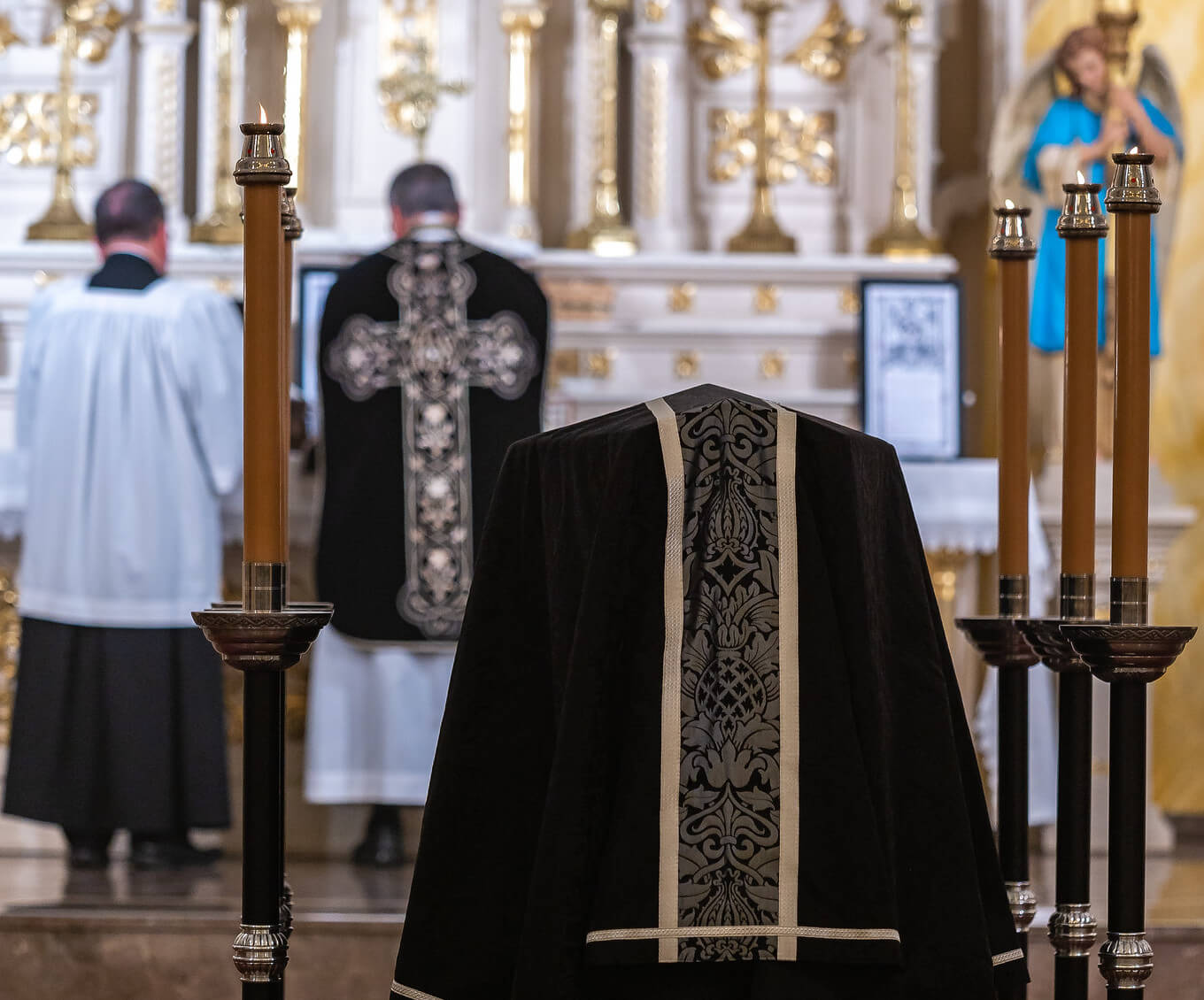
What has the Western musical tradition been trying to say about death, judgment, and mercy for eight centuries? And what does it mean that the Catholic tradition, which gave composers those words, has a serious and beautiful answer to every question the music raises?
There is a specific ache that great music about death opens in the chest, something that arrives before thought. Everyone who has sat in a concert hall during a Requiem knows the feeling. Not grief and not hope. The experience of reaching toward something you cannot name and cannot stop reaching for.
This concept begins in that feeling and follows it to its source. Not grief explained. Not hope promised. Longing honored, and then, carefully and honestly, answered.
The oldest question: what do we believe happens when someone we love dies? Palliative care physicians, consciousness researchers, the face of a person who has just lost someone. The Requiem is already playing. The audience already knows this music in their body.
The question of mercy. The theologian enters. The person carrying guilt about someone they lost before things were made right. The person who needs to believe that the one they lost is not simply gone, but held.
Verdi’s thundering brass against Fauré’s deliberate tenderness, a theological argument made entirely in musical choices. The concept holds both and lets the audience feel the tension. Then the doctrine of Purgatory begins to emerge: the place where mercy and justice are not in tension but revealed as the same thing seen from different angles. The concept cannot flinch here. If it does, it becomes a wellness documentary with a better soundtrack.
Grief in its rawest form. The portrait subjects. The widow, the estranged child, the person whose grief is tangled with moral complexity. The Lacrimosa’s emotional grammar is already in the audience’s body. The concept does not have to earn the emotion. It has to be worthy of it.
The doctrine of Purgatory named and explored in full. Not announced. Discovered. A theologian who has spent a lifetime with this material speaks with the authority of someone who has arrived at the truth by a long road. The key word is gentleness, not triumph.
The concept ends where the music ends, in light. Not the resolution of every question, but the transformation of them. The grief is still real. The loss is still real. But the tradition says something about that loss that is more serious, more beautiful, and more demanding than anything else on offer, and the concept has earned the right to say it plainly.
A musical collaborator of serious standing is the first and most consequential attachment, more important than any interview subject. The commissioned recordings give the concept commercial life beyond the cinema: a standalone album, a concert event model with screening followed by live Requiem performance, and streaming rights to the performances independently. Long-tail assets that belong to Castletown Media.
The Requiem is one of the most performed bodies of music in Western culture. Its audience reaches far beyond religious faith. No documentary has taken that audience seriously as a starting point and followed the music into its theological source. This concept does, opening the Catholic teaching on Purgatory to people who would never seek it directly but are, in the most literal sense, already singing it.
Musical collaborator: the first and most urgent attachment. This person shapes everything.
Concert event model: develop distribution architecture in parallel with the concept.
Portrait subjects: people for whom this music is not historical but alive.
The Dies Irae question: the concept must decide how to hold the wrath before it can hold the light.
- Lux Aeterna. Highest ceiling. Widest audience. The commissioned recordings create a commercial asset that funds development and generates revenue independent of the release. The talent it can attract elevates the entire slate.
- The Ones We Carry. Most executable. The story development path is clearest: parish networks, grief ministries, the November liturgical anchor, the Fatima theological frame. This concept can be in production soonest and serves the existing Catholic audience most directly.
- The In-Between. Most ambitious. The monastic access is the long relationship to build. This concept needs the most development time and the most precise execution.